What Should You Check Before Ordering Onyx for a Backlit Feature?
Prepare an onyx inquiry with a clear stone-and-lighting review: slab identity, mockup, panel layout, approval responsibilities and quotation details.
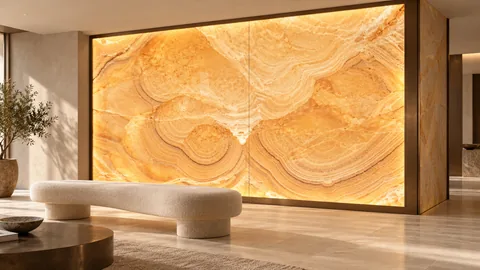
Onyx can look very different when illuminated from behind. Before ordering stone for a reception wall, decorative panel or another backlit feature, agree how the selected stone and proposed lighting will be reviewed together. An attractive catalogue photo alone cannot establish the finished result.
Start with the selected stone and the intended feature
The Natural Stone Institute describes translucency as a property of most onyx varieties. That does not establish the appearance or light transmission of a particular slab. It also notes vulnerability to chemical and abrasive attack. Confirm suitability for the intended application with the project’s responsible specialists; a decorative appearance does not establish performance in use. [1]
Identify the material, slab or sample reference, intended position, dimensions and requested order form. Make clear whether the inquiry concerns slabs or fabricated pieces, and who will confirm final measurements and fabrication details. Do not assume the stone supplier also designs or installs the lighting.
Review stone and light as one proposed assembly
Ask the stone, fabrication and lighting teams to agree a representative mockup using the selected material and proposed assembly. Record the stone thickness and finish being assessed, any backing or treatments, the proposed lighting and diffusion, and the space available in the design. These are questions for coordination, not a universal installation specification.
Review the appearance with the light off and on. Look for areas that appear brighter or darker, visible light points, shadows and differences between adjoining pieces. Record what the decision-maker accepts and what needs another trial. A phone-light check may help an initial discussion, but it does not replace approval of the proposed assembly. GPI Design recommends mocking up stone and lighting together; Evo-Lite likewise treats the stone, diffusion and available space as interdependent choices. [2][3]
Keep the layout and approval record identifiable
Mark slab and piece IDs on the proposed layout. Check vein direction, the relationship between adjacent panels, any intended bookmatch, and the position of seams. GPI Design specifically highlights the interaction between seams and natural veining. [2]
Keep the drawing revision, mockup reference, review conditions and named approver with the decision. Record whether approval covers an initial selection, a mockup or the finished pieces. A small approved sample does not describe every part of a slab. If a material, backing, lighting component or layout changes, agree which parts of the review must be repeated.
Send a comparable inquiry
Stone name and selected slab/sample references; application and destination.
Slabs or fabricated pieces; quantity and measurement basis.
Dimensions, thickness and units; finish reference.
Drawing revision, piece IDs, layout, edges and cutouts where relevant.
Backing or treatments to confirm; proposed lighting/mockup information and who coordinates it.
Agreed acceptance criteria and tolerances, with the responsible approver identified.
Packing, piece labels and information needed for final-piece checking.
This checklist is an editorial synthesis for organizing a buyer inquiry. It does not specify electrical, structural or installation requirements, or promise a particular lighting effect.
Discuss the stone selection
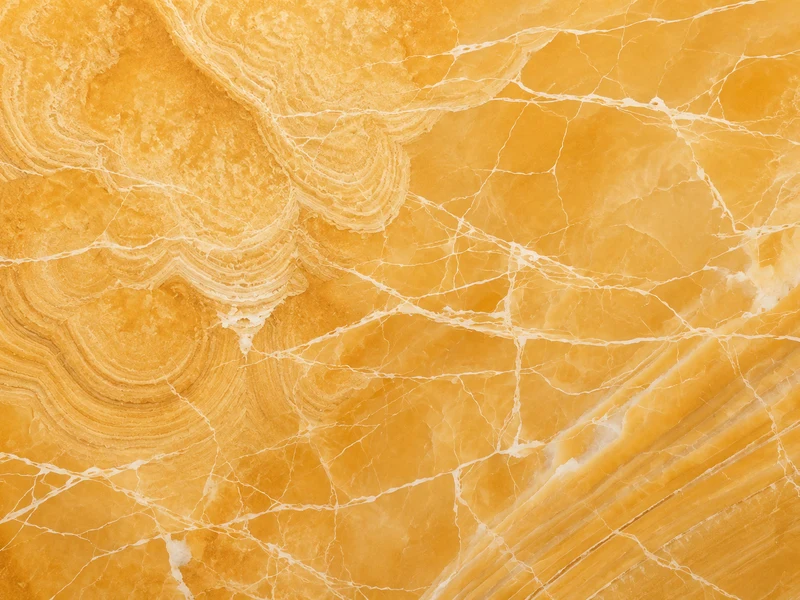
Orange Onyx is a catalogue reference for starting a stone-selection discussion. Its product photo is an unlit stone reference, not proof of a particular slab’s backlit appearance or current availability. Share the intended feature, dimensions, quantity and destination through the contact page for assessment. Confirm the actual material and proposed assembly separately.
Sources: [1] Natural Stone Institute, undated material overview. [2] GPI Design, 6 December 2011, practitioner guidance. [3] Evo-Lite, 20 October 2019, lighting-manufacturer guidance. Sources accessed 27 October 2026; vendor recommendations are context, not universal specifications.
Explore the stone discussed in this guide
Open a product page to review its gallery and specifications, then use its WhatsApp contact options to discuss your requirements.
Discuss your project with MAHED