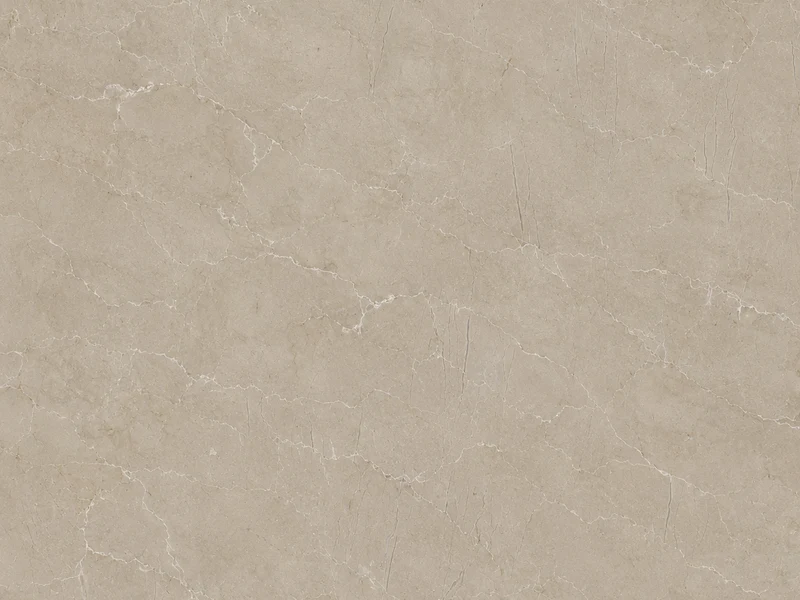
Why Can a Marble Slab Look Different from Its Sample?
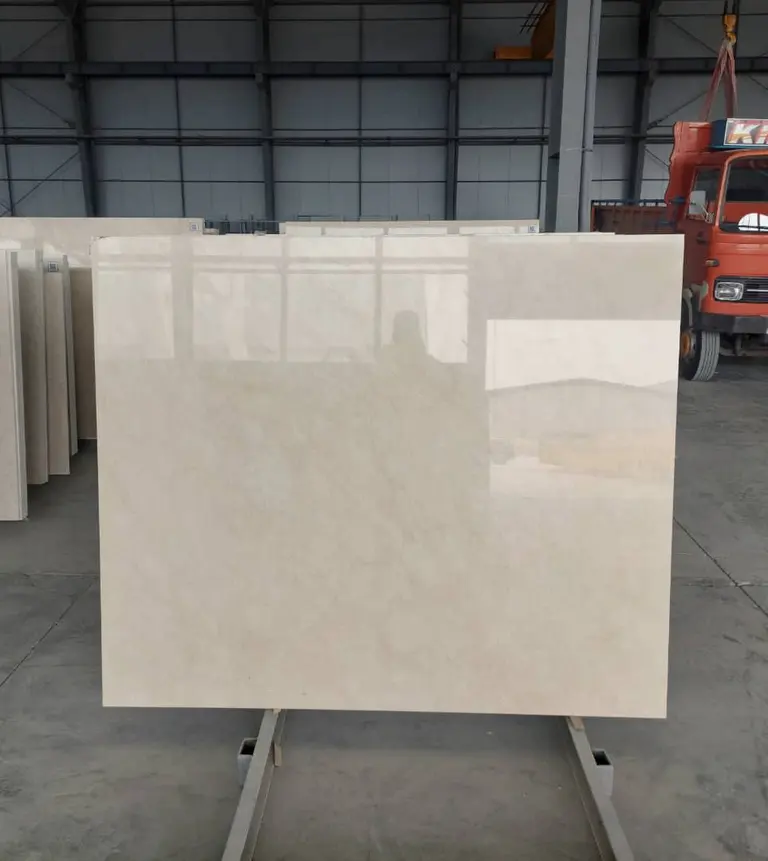
Before approving marble slabs, connect the sample to the proposed lot, review full-slab images and record the agreed appearance, finish and dimensions.
A small sample shows only a fragment of the stone; the full slab may reveal veins or colour changes outside that fragment. A small marble sample is useful for an initial choice, but it is not enough on its own to approve a slab order. Before cutting or packing, review the actual slabs proposed for your order, connect them to identifiable references and agree on the appearance range you will accept.
What a sample can—and cannot—tell you
A sample lets you examine a small area of colour, surface finish and texture. It does not show how veins cross a full slab, whether a darker patch appears elsewhere, or how neighbouring slabs will look together. A catalogue photo has a similar limitation: it introduces the material but does not identify the stone offered for your project.
Use Natural Stone, the Natural Stone Institute’s public education site, recommends examining the actual slabs rather than selecting from a sample alone, so the buyer can see the wider colour and vein pattern. [1] For a remote purchase, ask for identifiable full-slab photographs and discuss any remaining uncertainty before approval.
Start with the slabs proposed for your order
First ask whether the sample came from the lot now being proposed. If it is a general showroom sample, treat it as a reference for the look you want—not proof that the order will match it. Ask the seller to connect the proposed slabs to lot, block or slab identifiers wherever those records are available.
Request a full-face view of the slabs being offered, plus closer views where a feature needs explanation. Keep the identifiers visible or clearly matched to each image. If the supplier substitutes a slab or changes the proposed lot, revisit the approval rather than relying on an earlier photograph.
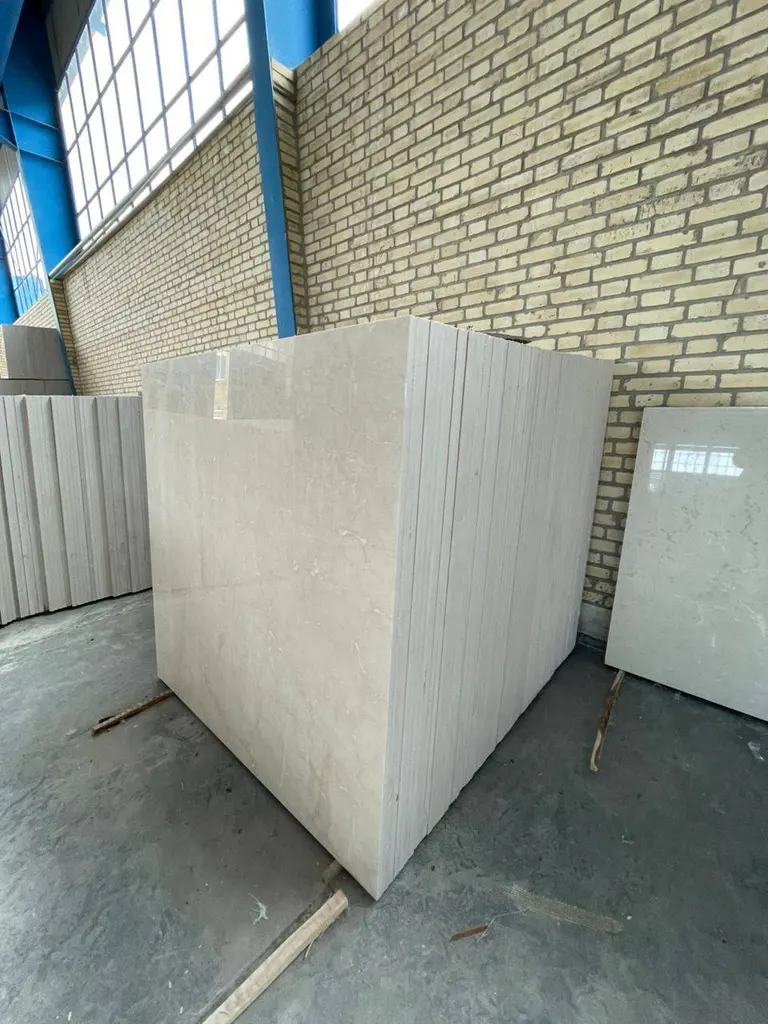
Compare the range, not only the most attractive slab
For a multi-slab floor or wall, ask to see the proposed appearance range: quieter areas, stronger veining and changes in background tone. Do not approve the whole order from one attractive close-up. There is no universal sample count in this checklist; the evidence should be enough to understand the actual selection and the areas where it will be used.
Compare photographs taken under similar lighting where possible. Reflections, viewing angle and a screen can make comparison difficult. If adjacent veins or tonal continuity matter, request a numbered layout or dry-lay proposal tied to the slabs. A layout records the intended arrangement; it does not make naturally different slabs identical.
Check finish and dimensions separately from colour
Confirm that the sample and proposed slabs have the finish you intend to order. Record the required thickness, usable dimensions and any agreed tolerances explicitly; do not infer them from a photograph or from a product name. Ask what filling, resin treatment, repairs or backing are present and request clarification of areas you cannot assess visually.
The Natural Stone Institute’s specification course identifies colour variation, finish options, required sizes and quantities, and the project’s design intent as selection considerations. [2] These need separate confirmation: liking the colour is not the same as approving the complete specification.
A practical slab-approval checklist
| Check | Question before approval |
|---|---|
| Sample reference | Is this sample from the proposed lot, or only a general appearance reference? |
| Actual slabs | Can each proposed slab be matched to a full-face image and a clear identifier? |
| Appearance range | Have the relevant differences in background tone, veins and patches been shown and discussed? |
| Finish and size | Are finish, thickness, usable dimensions and agreed tolerances recorded? |
| Treatments and condition | Have filling, resin, repairs, backing and any areas needing closer inspection been explained? |
| Layout | If adjacency matters, is the numbered arrangement tied to the identified slabs? |
| Approval record | Are the images, sample references, accepted appearance and unresolved points recorded before cutting or packing? |
Keep a clear approval record
Keep one record that names the material, proposed lot or slab references, dated images, sample reference, finish, dimensions and any agreed layout. State which visible variations are accepted and which questions remain open. Share that same record with the seller and the person responsible for the project’s material selection before authorizing the next agreed stage.
For example, “the beige sample is approved” leaves the order unclear. A more useful record links the sample to the identified slabs and says that their documented appearance is accepted, subject to the separately agreed dimensions and finish. This is a purchasing recommendation, not a legal template or a guarantee against differences.
Appearance approval is not a technical suitability assessment
A colour or layout approval does not establish strength, slip resistance or suitability for an exterior, wet area or other application. Ask the responsible project professional which technical documentation or tests are relevant to the stone and intended use. Do not substitute a gallery image, trade name or visual inspection for that assessment.
Continue with a specific material
For an example of the material shown here, view MAHED’s Shayan Beige Marble page. Its gallery helps you discuss the appearance you want; the actual slabs, specification and commercial terms still need confirmation for your request. When contacting the team, include your application, required dimensions and approximate quantity, destination, and the sample or image references you want to compare.
Sources and scope
This guide combines the two public selection references below with MAHED’s product information and an original purchasing checklist. It does not report laboratory testing or approval of any current lot. Photos are existing MAHED gallery images; they do not establish current availability.
[1] Use Natural Stone — A Beginner’s Guide to Stone Selection (appearance section)
[2] Natural Stone Institute — Art of Specifying Natural Stone (public course overview)
Questions buyers ask
Can photographs replace seeing the stone in person?
They can support a remote review, but they do not remove uncertainty about colour, finish or condition. Ask for identifiable full views and closer views, and agree how any remaining uncertainty will be resolved before approval.
Does accepting a sample approve every slab in the order?
Do not leave that assumption unstated. Identify what the sample represents, which slabs the approval covers and which appearance variations are acceptable.
Do the photographs in this guide show available stock?
No. They are reference images from MAHED’s product gallery. Ask for current images and identifiers for the slabs proposed for your own order.
Explore the stone discussed in this guide
Open a product page to review its gallery and specifications, then use its WhatsApp contact options to discuss your requirements.
Discuss your project with MAHED